The reVinyled Process
From Rescued Vinyl Record to Something New.
Every piece starts with a real record that has reached the end of its listening life, but still has plenty of story left.
I choose the records, compose each design, cut every piece with my jeweler's saw, then file, drill, finish and assemble everything by hand at my bench in Philadelphia.
Where It Begins
The Record Decides More Than You Might Think.
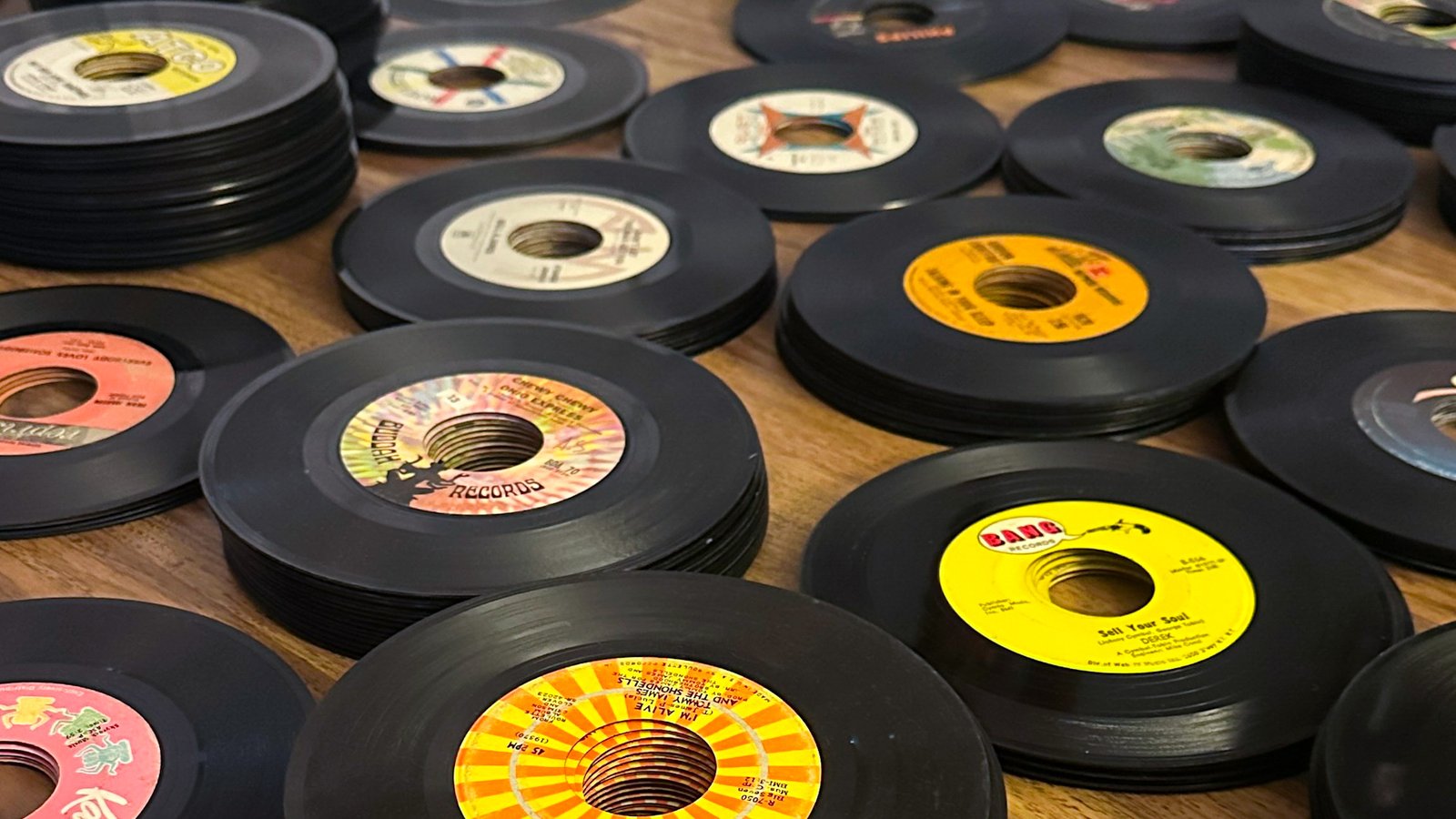
Before I cut anything, I look at the record. The label, the color, the lettering, the artist, the song, the grooves, even the wear that's already there. All of that can change what I see in it and what I decide to make.
The label is usually where I start. I move my shapes around it and look for the parts I want to keep, while leaving enough of the black vinyl and grooves that you can still see exactly what this used to be.
Composing the Record
Nothing Is Cut at Random.
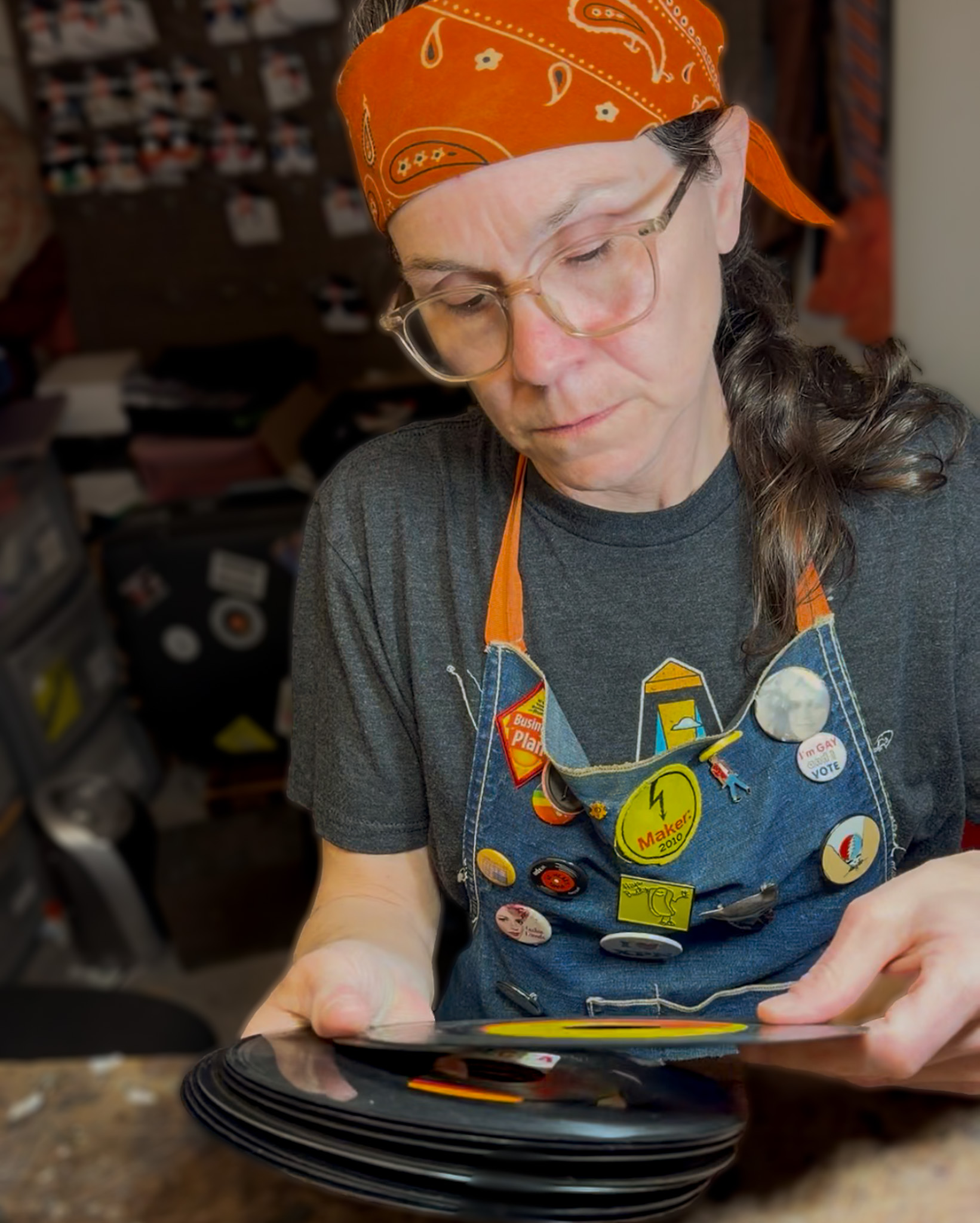
I Start With the Records.
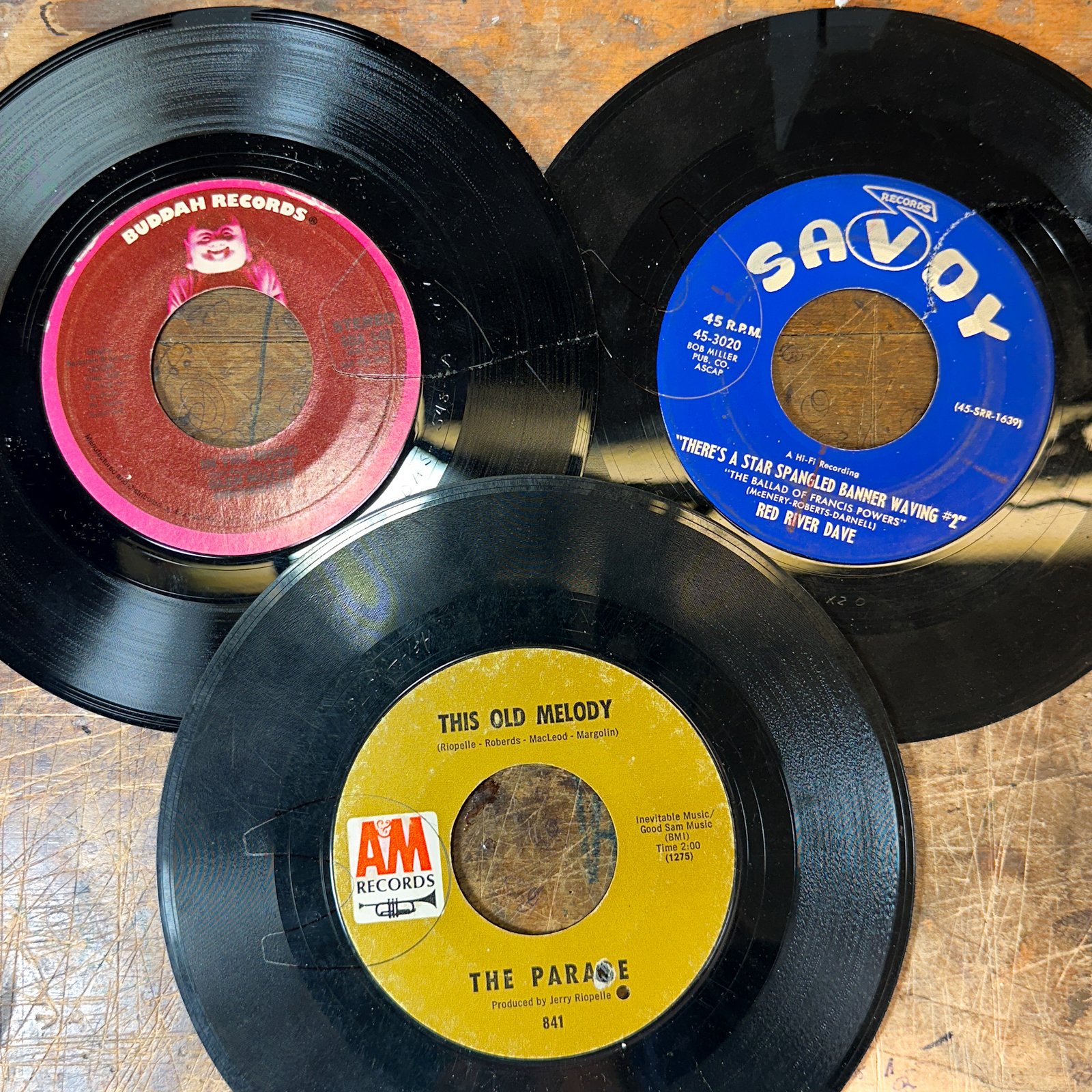
I pull a group together and start looking. Some records have great color. Some have lettering I want to save. Sometimes it's one tiny detail on the label that makes me know exactly where I want to start.
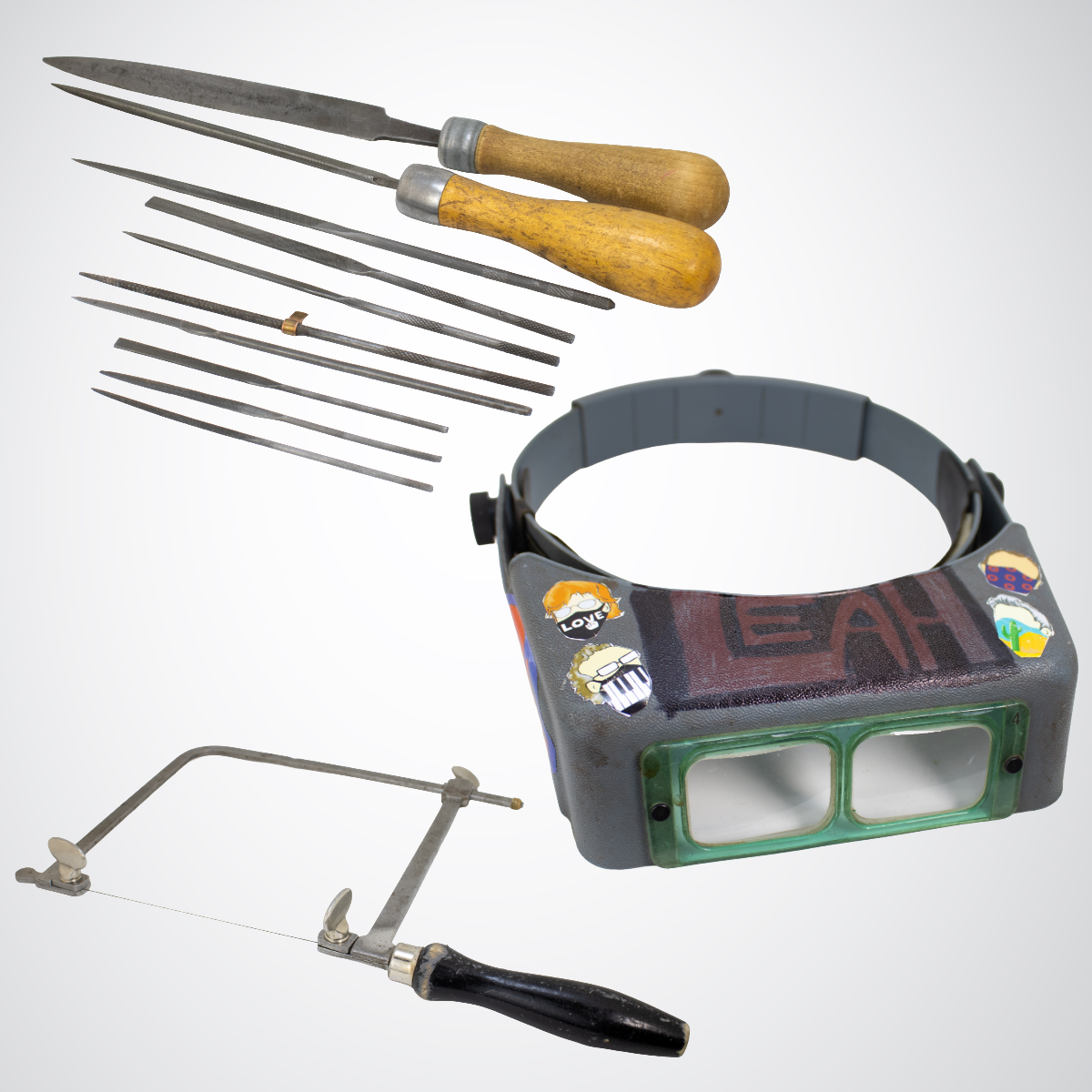 same bench tools.
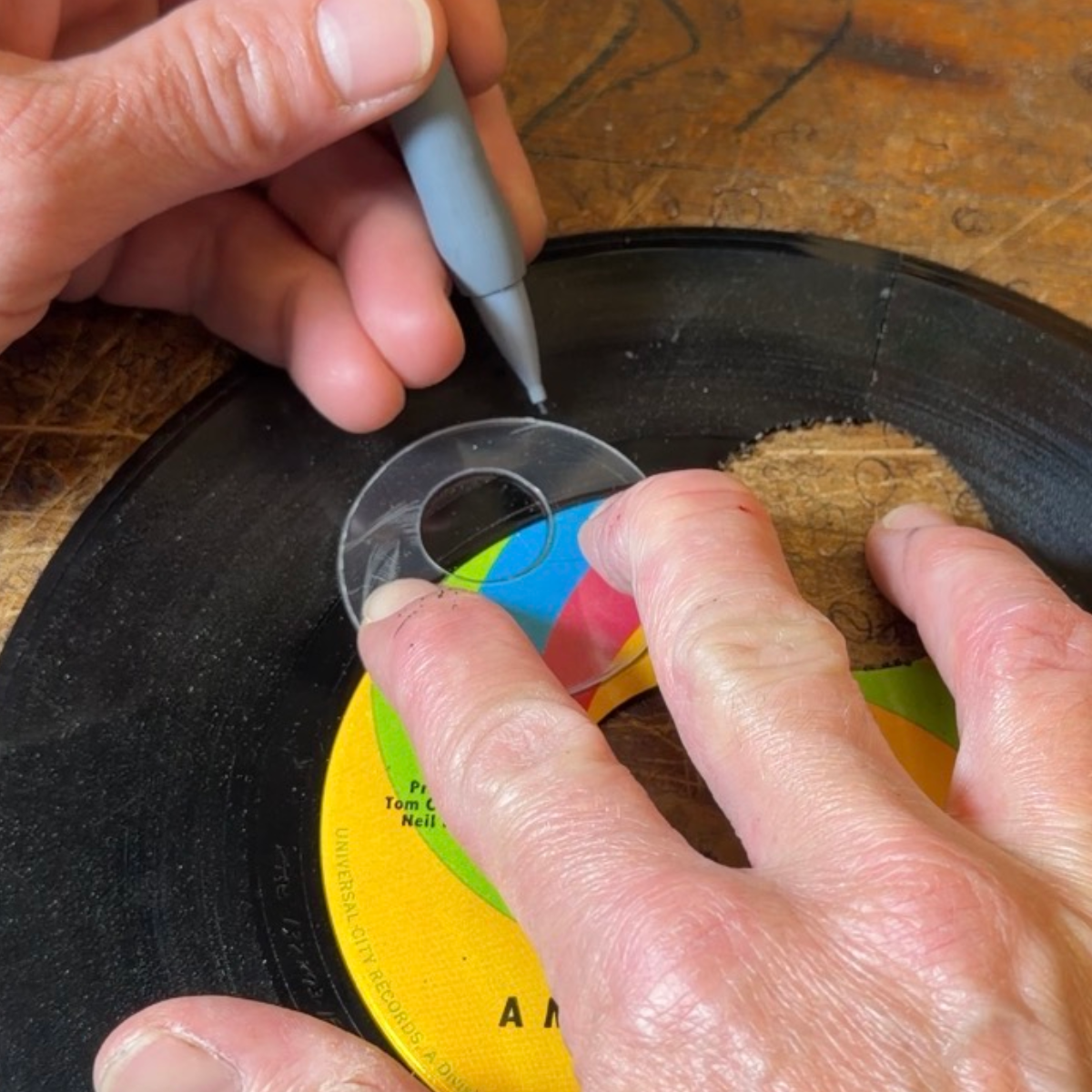
Move It Around Until It Works.
I start with the biggest shapes first. That gives me the most room to work with the label, lettering and color. I move each template around until I like what will land inside the finished piece, then I trace it.
I make my templates by hand from repurposed clear CD cases.
Before I Cut It, I Record It.
Once I've laid out that first round, I photograph the front and back of the record. That's how I keep track of exactly where each pair came from, even after the original record has been cut apart.
04 · The Cut
The Cut Is Part of the Design.
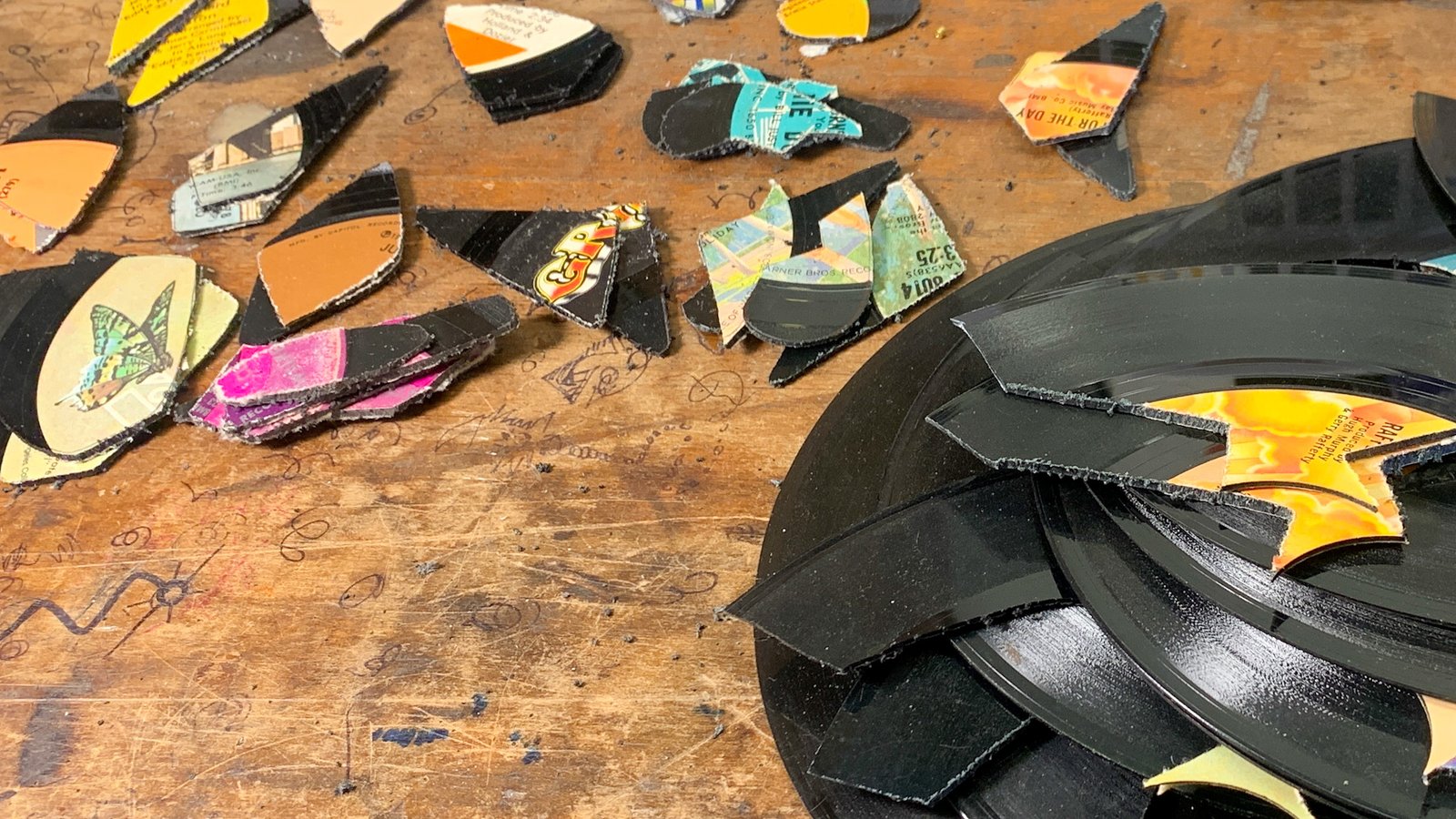
Once everything is traced and documented, I start cutting. I use the same kind of jeweler's saw I use at my jewelry bench and cut each shape by hand.
And I don't finish the whole record in one shot. Once the bigger pieces are out, I stop, look at what's left and start composing all over again.
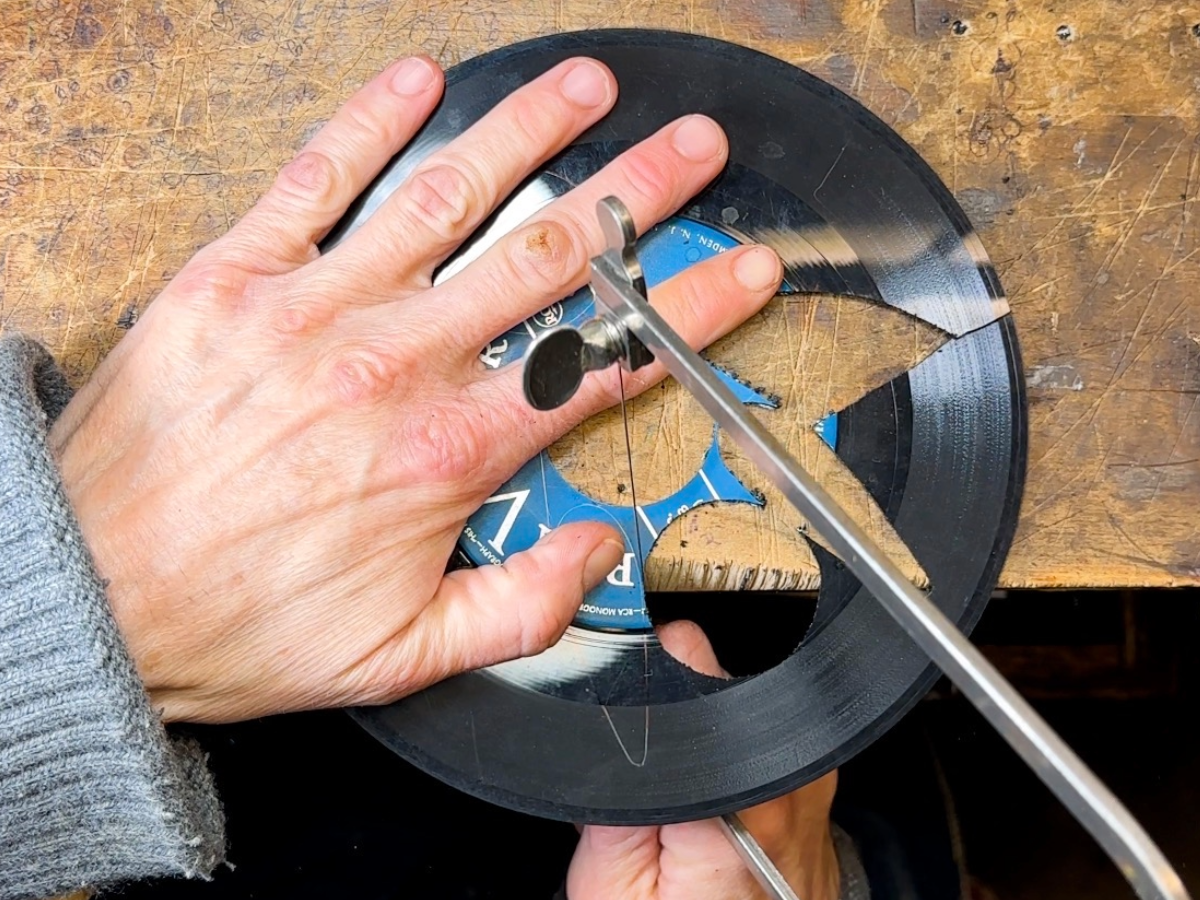
 back to the record...
Back to the Record
Then I Look at What's Left.
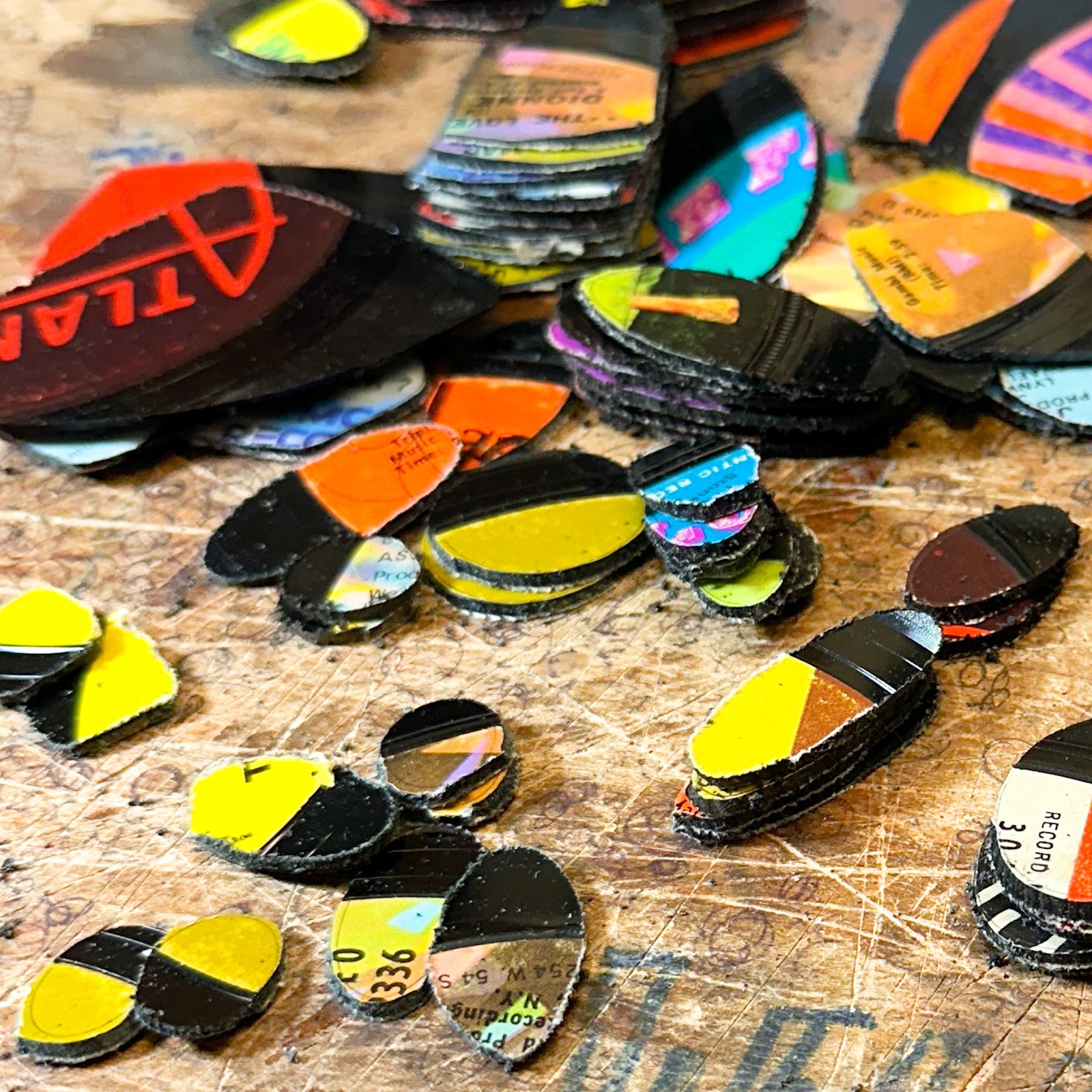
After the larger pieces are cut, the record looks completely different. So I go back to it. I move the smaller shapes around, find the next good bit of label or color and figure out what the record can give me next.
Then I do it again. Medium, small, extra small, button studs, minis. The record keeps changing every time I cut into it, which means the composition keeps changing too.
After the Cut
The Saw Is Only the Beginning.
Once the shapes are out of the record, I'm basically back at my jewelry bench. I file them, clean up the edges, drill them and get every piece ready for hardware. The material changed. My tools didn't.
Clean Up the Cut.
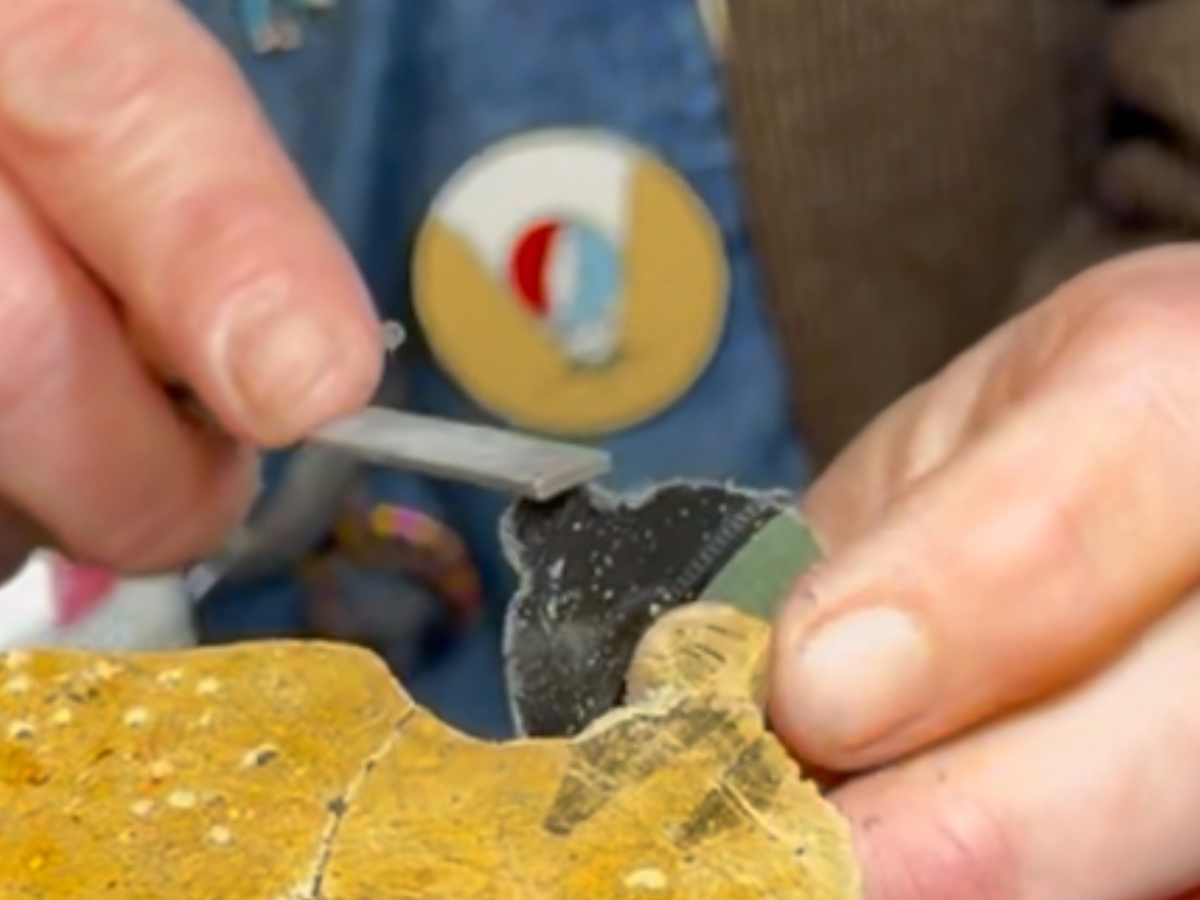
The saw gets me the shape. Then I hand file the edges, smooth everything out and refine the silhouette until it feels right in my hand.
Ready for Hardware.
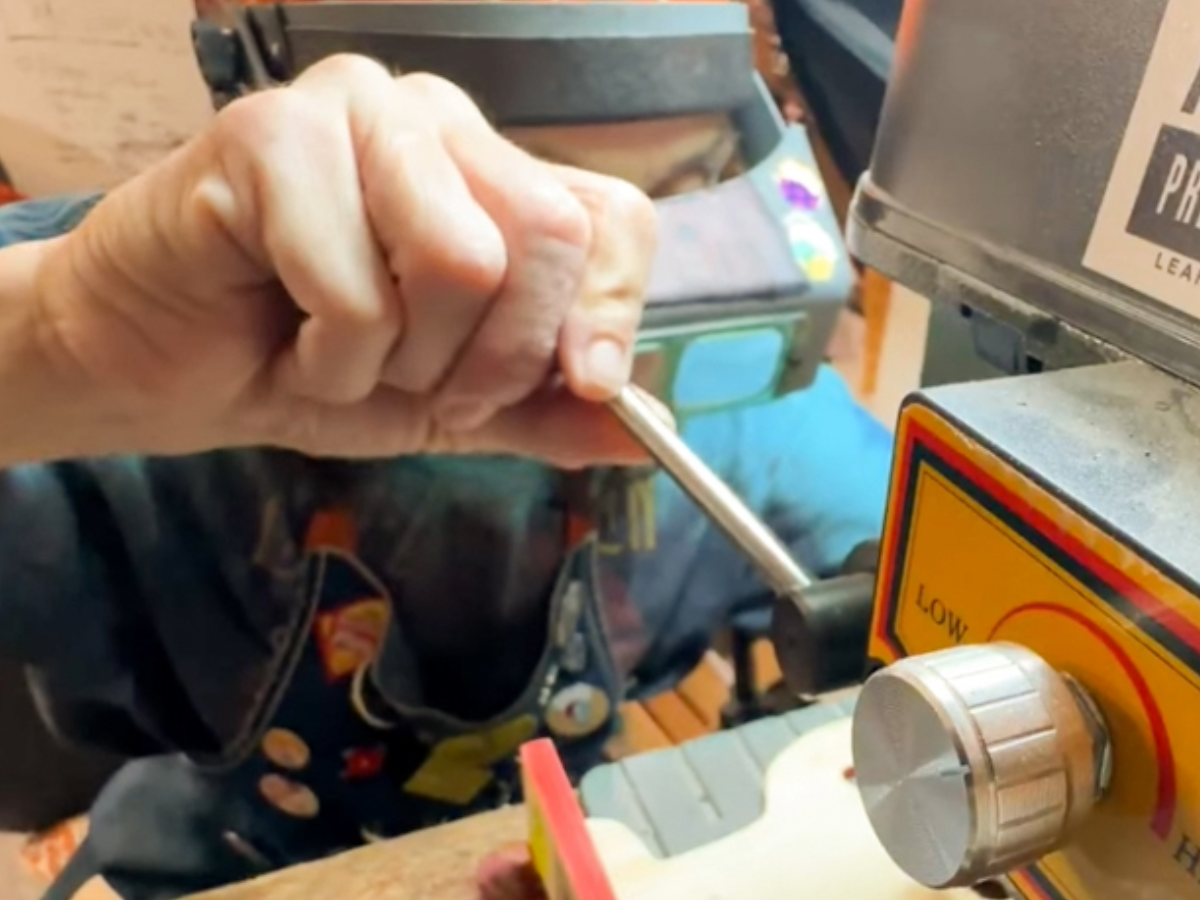
I drill the holes, clean the pieces again and give everything a final check before the ear wires, posts or other hardware go on.
07 · Assembly
Then It Becomes Jewelry.
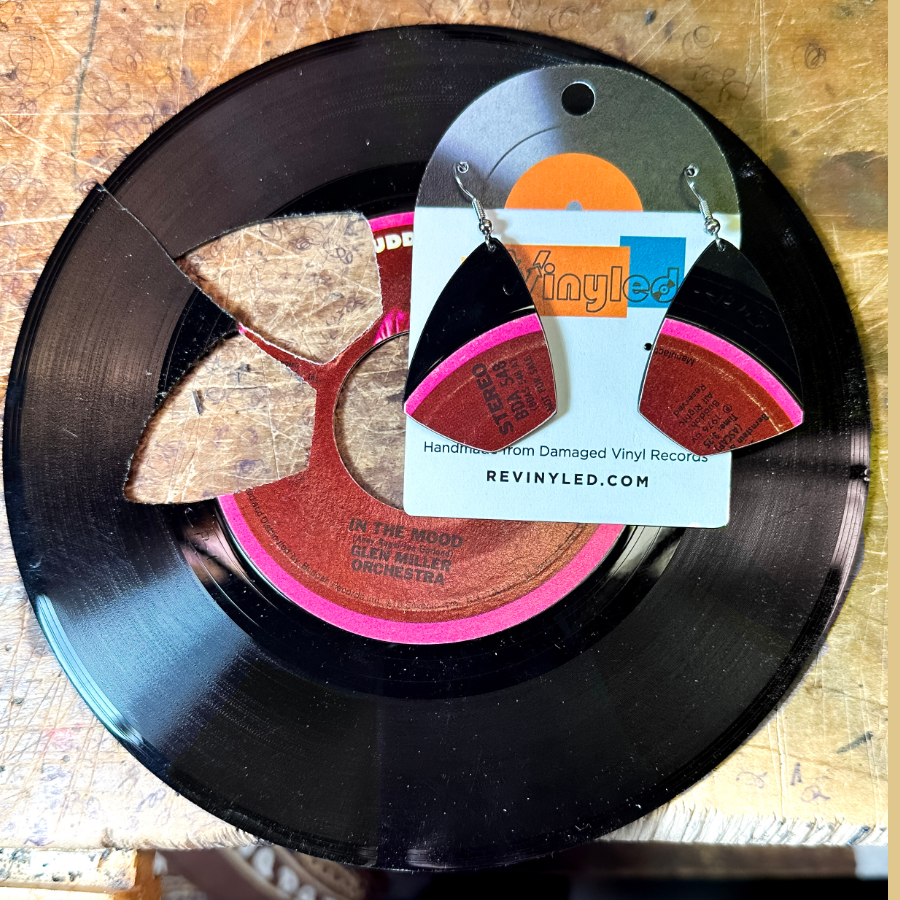
Once the vinyl work is finished, I add the stainless steel ear wires, posts and whatever else that particular design needs. This is the point where all those little pieces on my bench finally become earrings.
Cut + Filed
Every vinyl piece has been cut, shaped and finished by hand.
Put Together
Hardware gets added after the vinyl itself is completely ready.
Still Connected
Both earrings in the pair came from the same physical record.
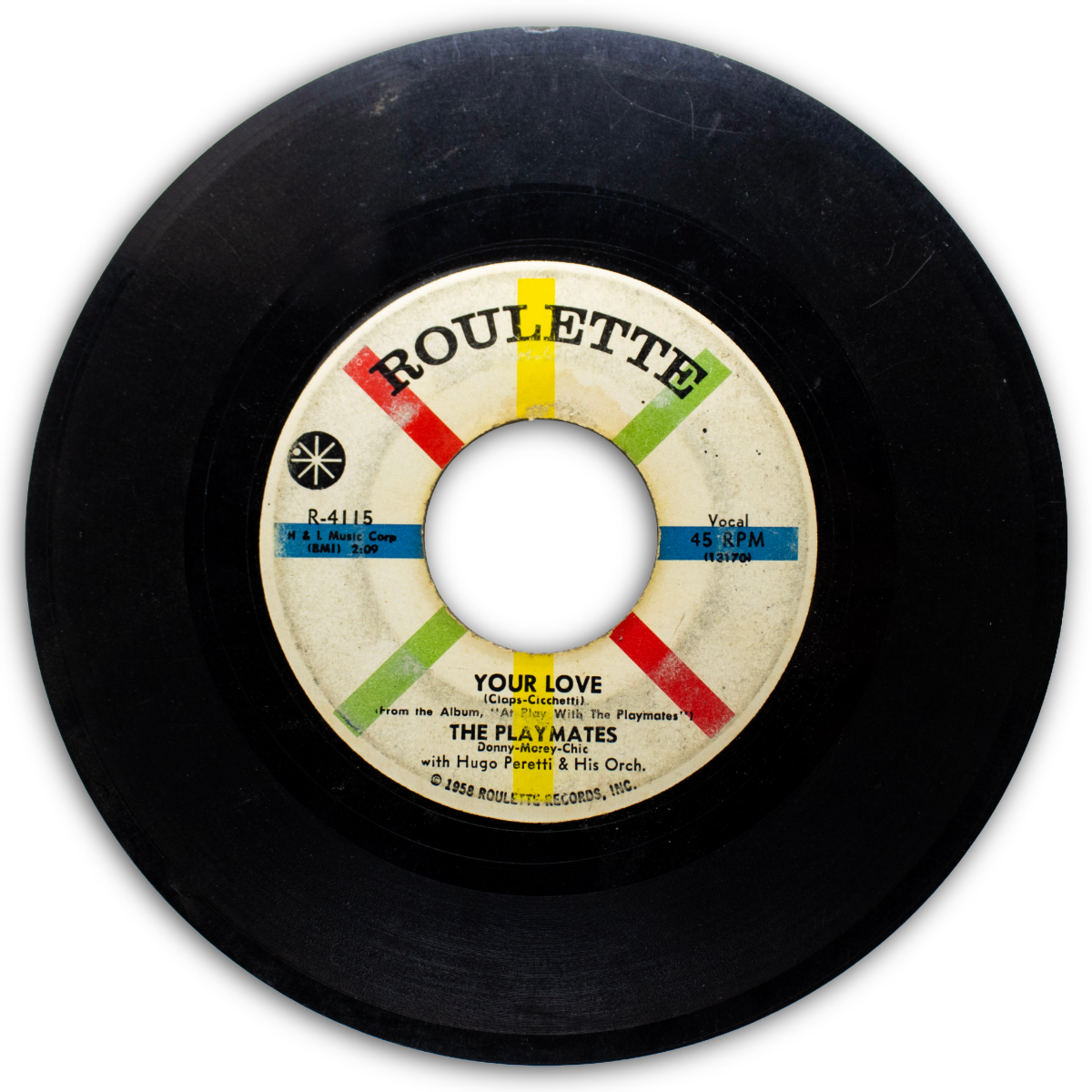
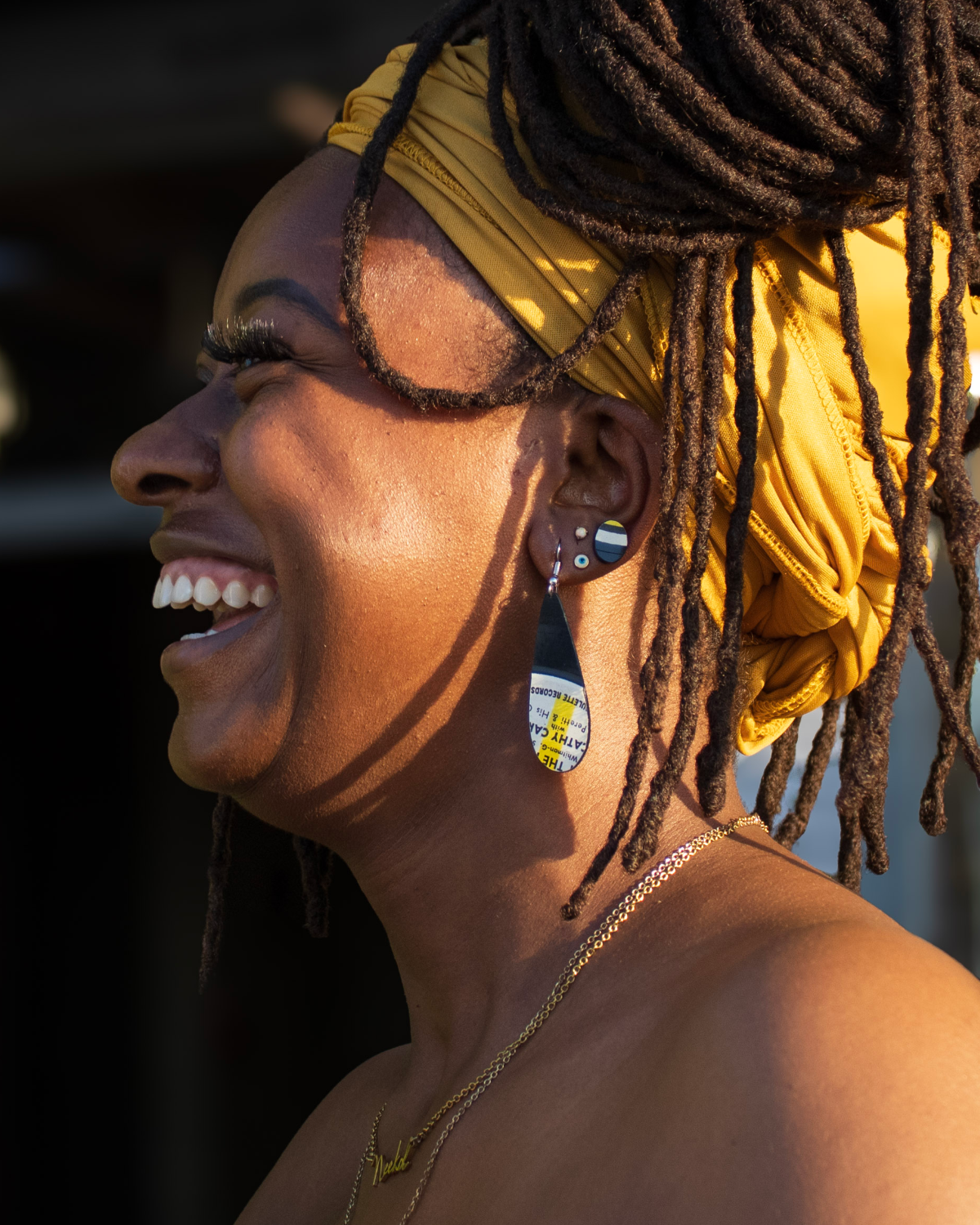
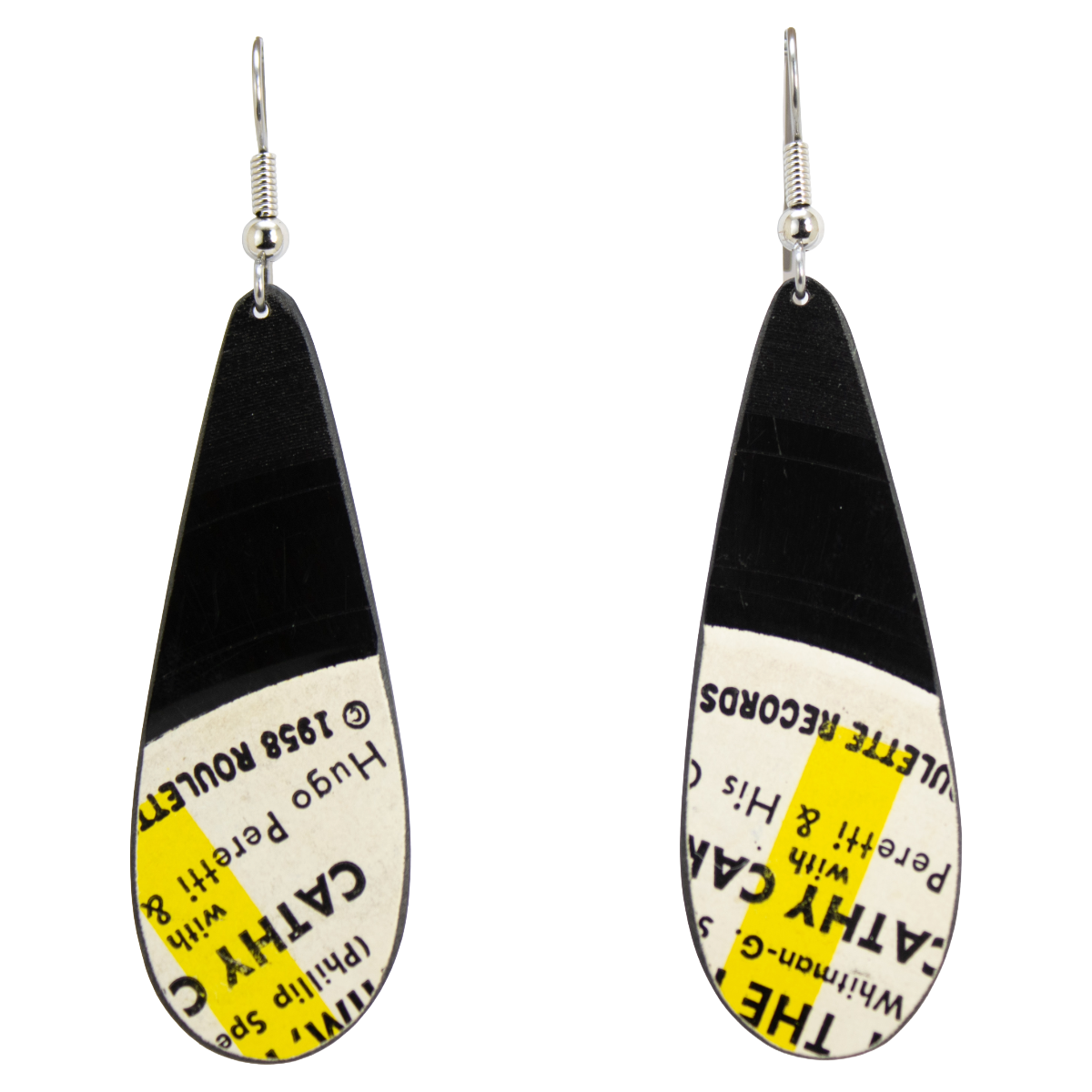
From the Record to the Finished Pair
Every Record Has a Story.
We Give It Another Chapter.
This is the original record, the earrings handcrafted from it, and the finished pair being worn. Its grooves, label color, and music history become part of something entirely new.
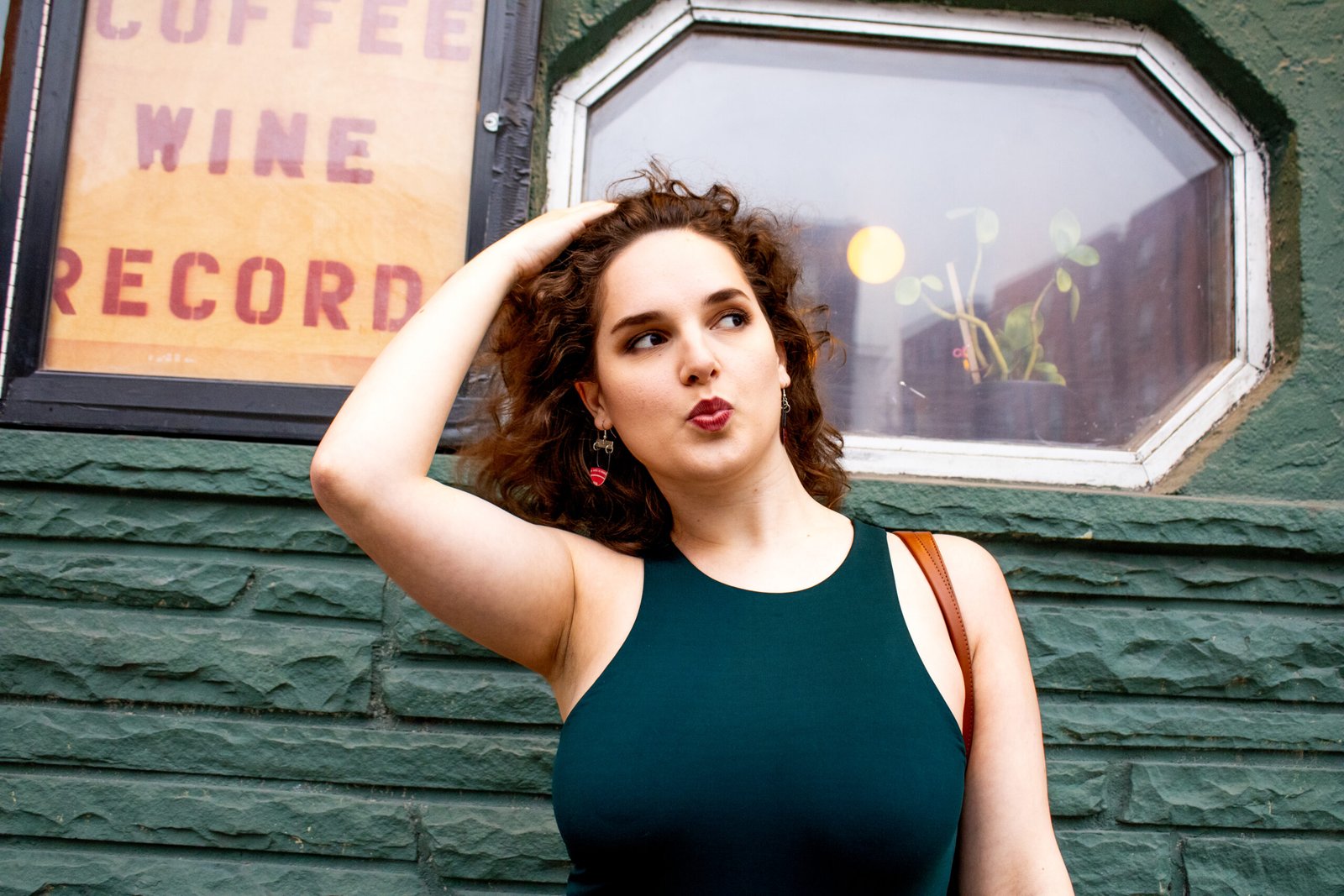
The record stopped playing.
The story kept going.
The Record Becomes Part of Someone Else's Story.
This is one of my favorite parts. A record that wasn't going to play anymore leaves my bench as something somebody can actually wear.
Maybe somebody recognizes the artist right away. Maybe they spot a song title or a piece of the label. Maybe they just love the color and then find out what record it came from. Either way, it starts a conversation.
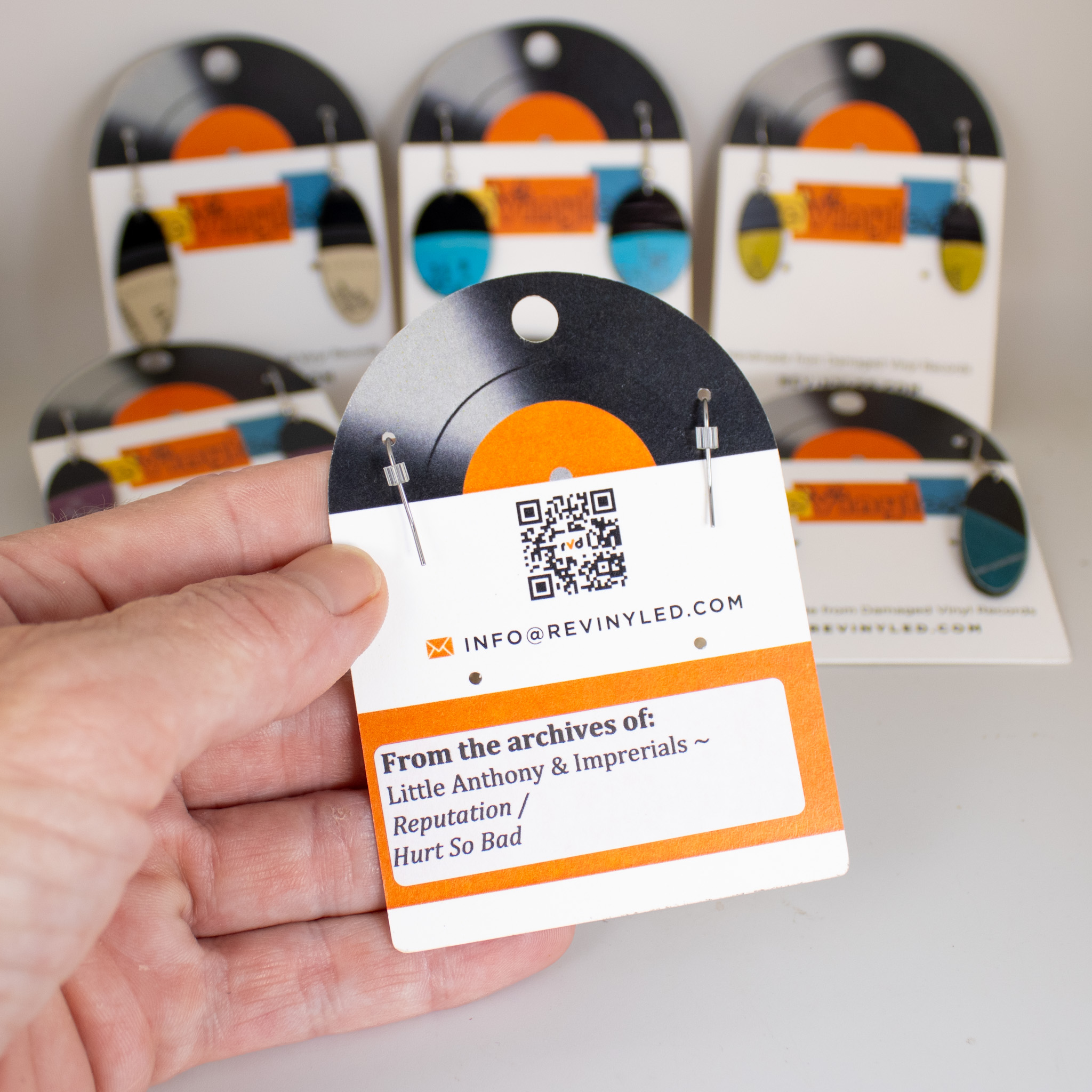 the story goes with it.
The Music Stays With the Pair
You Know What Record You're Wearing.
I keep track of the source record so that information can leave the bench with the earrings. The card tells you the artist, song, album and label whenever that information is available.
And both earrings in a pair always come from the same physical record. I want you to know what you're wearing, not just that it used to be vinyl.
Made by Hand. Made to Be Worn. Made to Be Remembered.
Every piece starts with a real record and leaves my bench ready for whatever comes next.